How to Sequence a Yin Yoga Class That Feels Connected, Not Random
Step 1: Pick a sequencing focus
A sequencing focus is the physical theme of your yin class. It’s what makes your class intentional instead of random. Choose one:
- Target area(s)
- Chakras
- Ayurvedic elements
- Meridians
- Prop setup
- Peak yin pose you’re building up to
Step 2: Make a list of every pose that fits your sequencing focus
Write down all the poses you could use for that focus, without worrying about how they’ll sequence together. This is just a brain dump of the poses you COULD put into class.
Step 3: Sequence by position of the body
Sequence the poses by body position (for example, on your back, then seated, then tabletop or kneeling, then on your belly, then back to your back) so students aren’t flopping around on the mat.
This is the fun part! Get on your mat and play. Use your list of potential poses and see how the yin poses can flow together.
In a 60-minute class, I generally teach 6 to 10 main yin poses. Many of those are done on both sides, and when needed I add rebounds and counterposes between them. The total comes to around 16 to 24 poses by the time everything is counted.
Make sure to leave time for rebounds, counterposes, and transitions. That’s why the times in your plan might not add up to 60 minutes. In a 60-minute class, I like to leave about 10 minutes for transitions between poses.
A rebound is a pause after a long hold. Rebound poses include savasana, belly down savasana, side lying, and pentacle (star).
A counterpose is a gentle movement in the opposite direction of the pose you just held.
Step 4: Savasana
End every class with savasana. Give students at least 5 minutes in a 60-minute class.
Let’s Build One Together
Let’s walk through the steps with a real class.
Step 1: Pick a sequencing focus. My focus is meridians. Let’s build a yin yoga class for winter. Winter is connected to the Water element, which goes with the Kidney and Bladder meridians. The Bladder meridian runs along the back of the body, from the head down the spine and the backs of the legs. The Kidney meridian runs up the inner legs and along the front of the torso.
The target areas are:
- Back of neck
- Spine / front and back of torso
- Glutes
- Hamstrings
- Calf
- Ankles and feet
- Groin
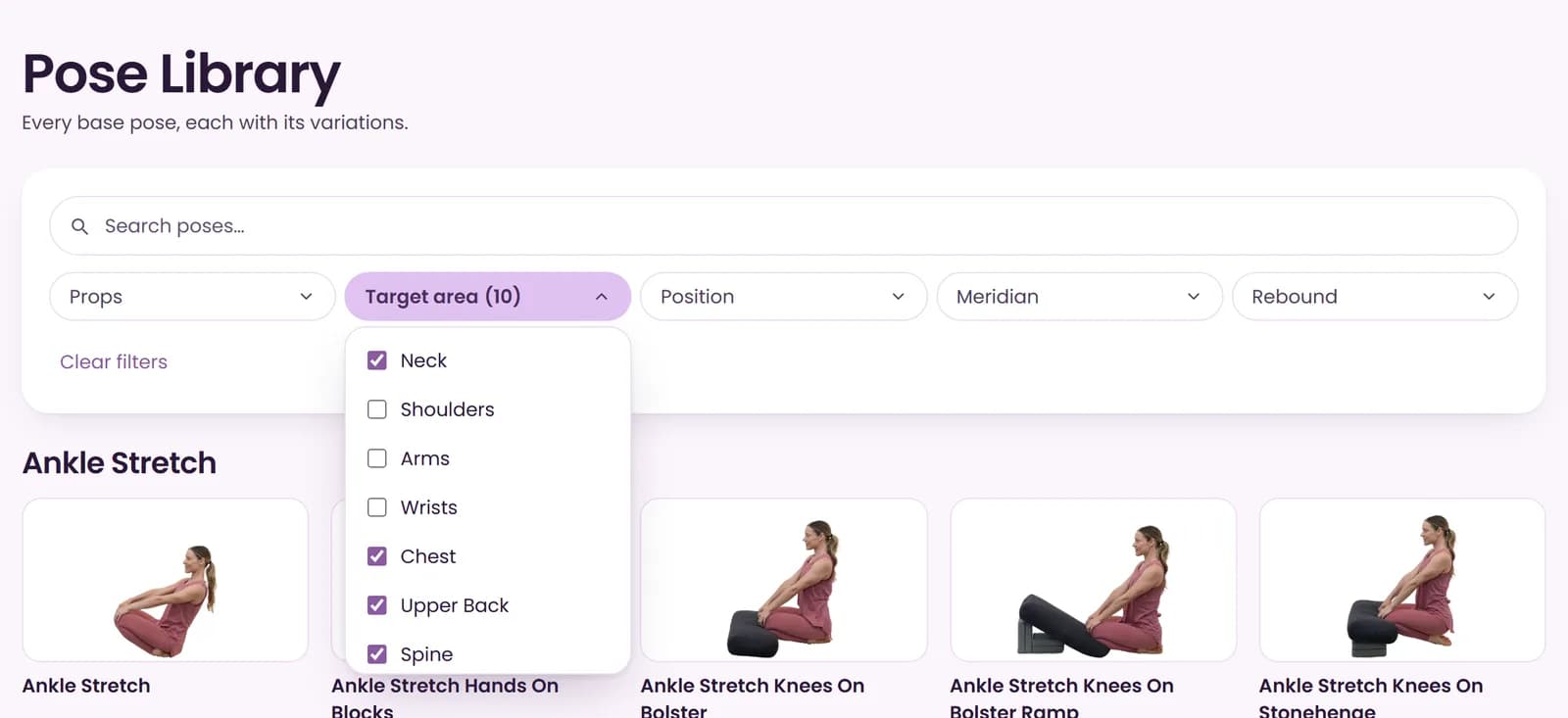
Step 2: Make the list. Here is a list of all the poses I could potentially put into this class.
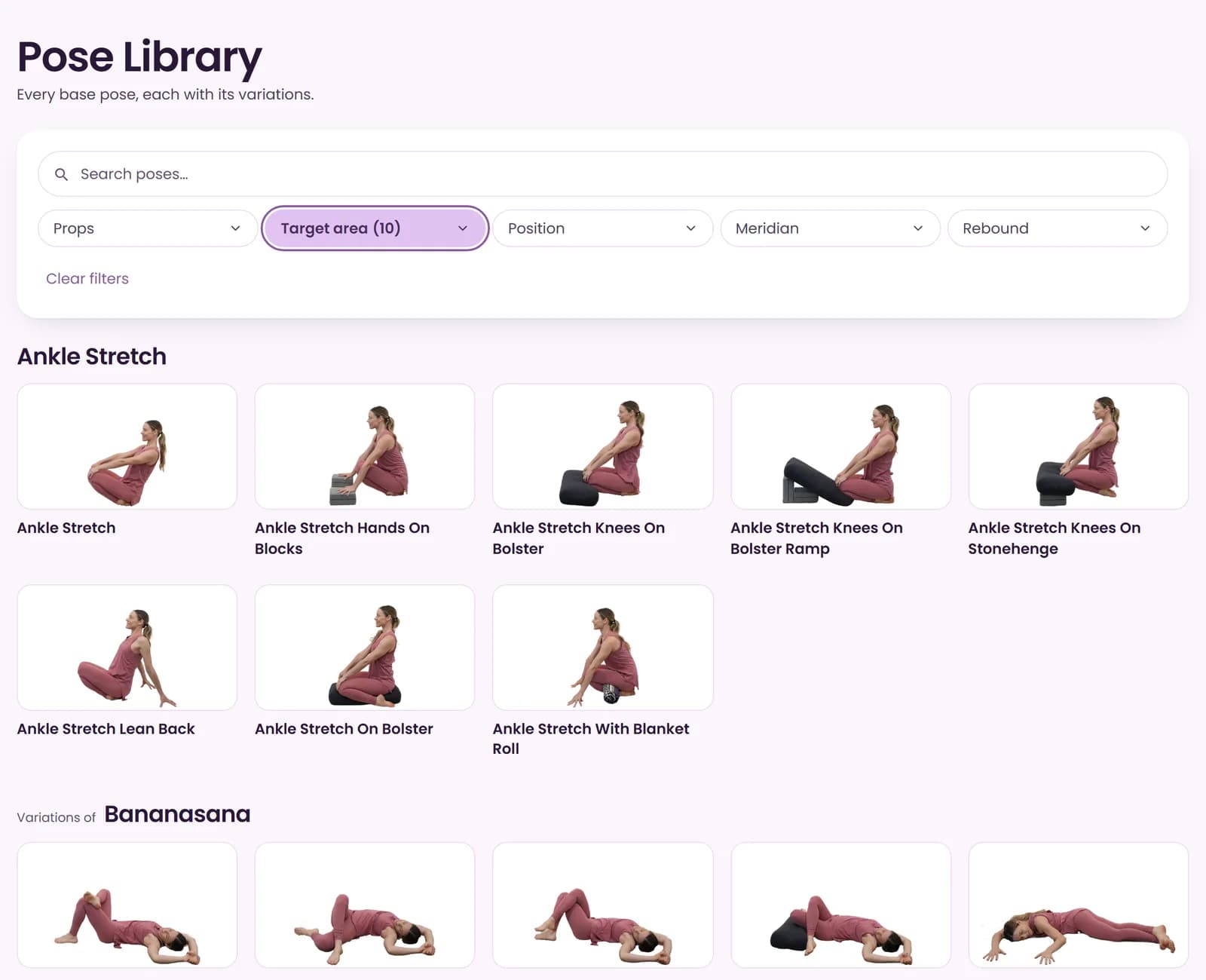
Step 3: Sequence by position of the body. Now I sequence the class:
- Reclining butterfly
- Reclined hamstring stretch with a strap around the upper back and foot, then supine twist, then repeat on the second side
- Easy seat neck stretches, then pocket neck stretch, then switch the cross of the legs and repeat on the second side
- Caterpillar
- Cat/cow
- Toe squat
- Downward dog
- Dangling with a block under one foot, then the second side
- Child’s pose
- Crocodile
- Fish with a bolster the long way
- Savasana
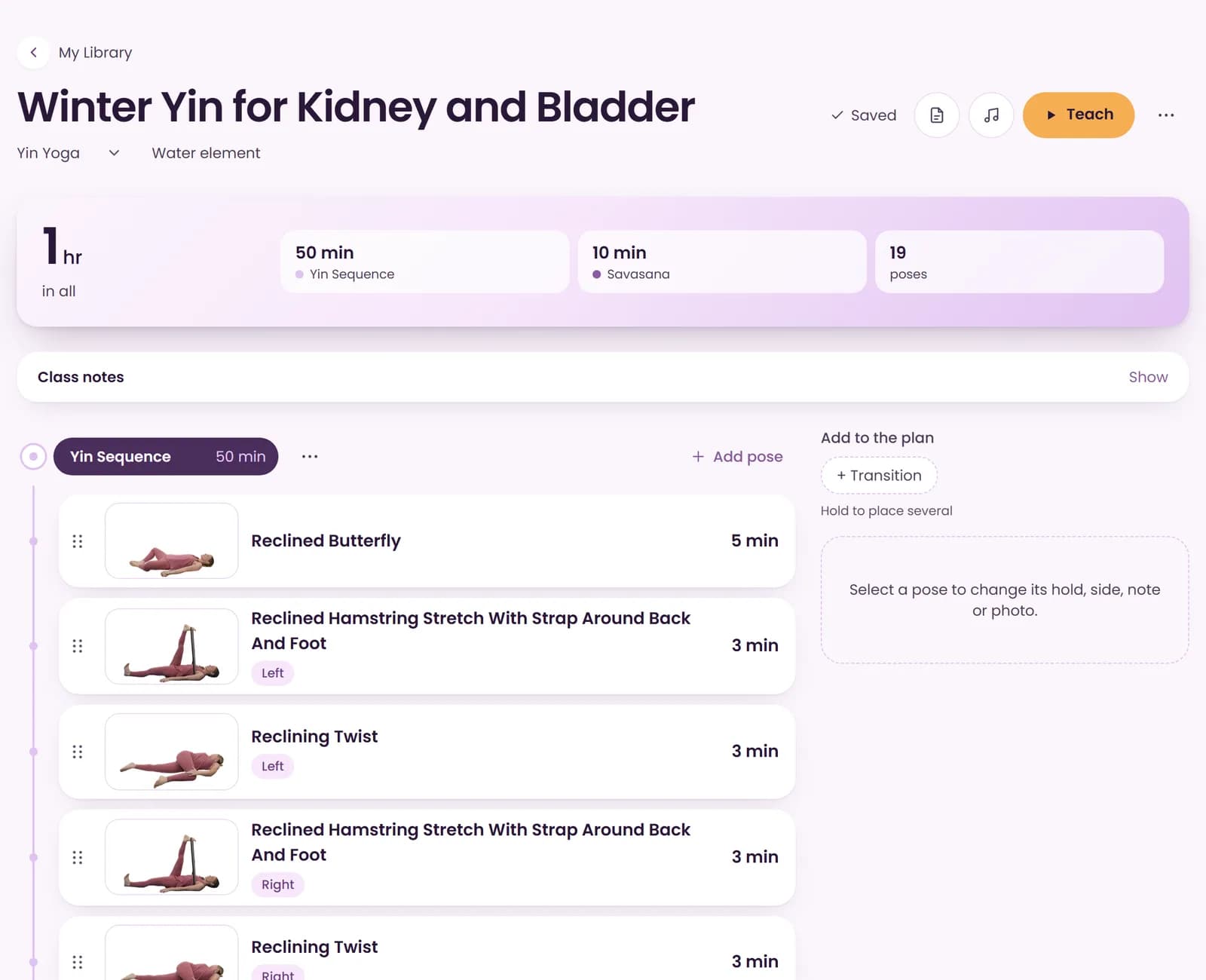
Step 4: Savasana. I end with 10 minutes of savasana.
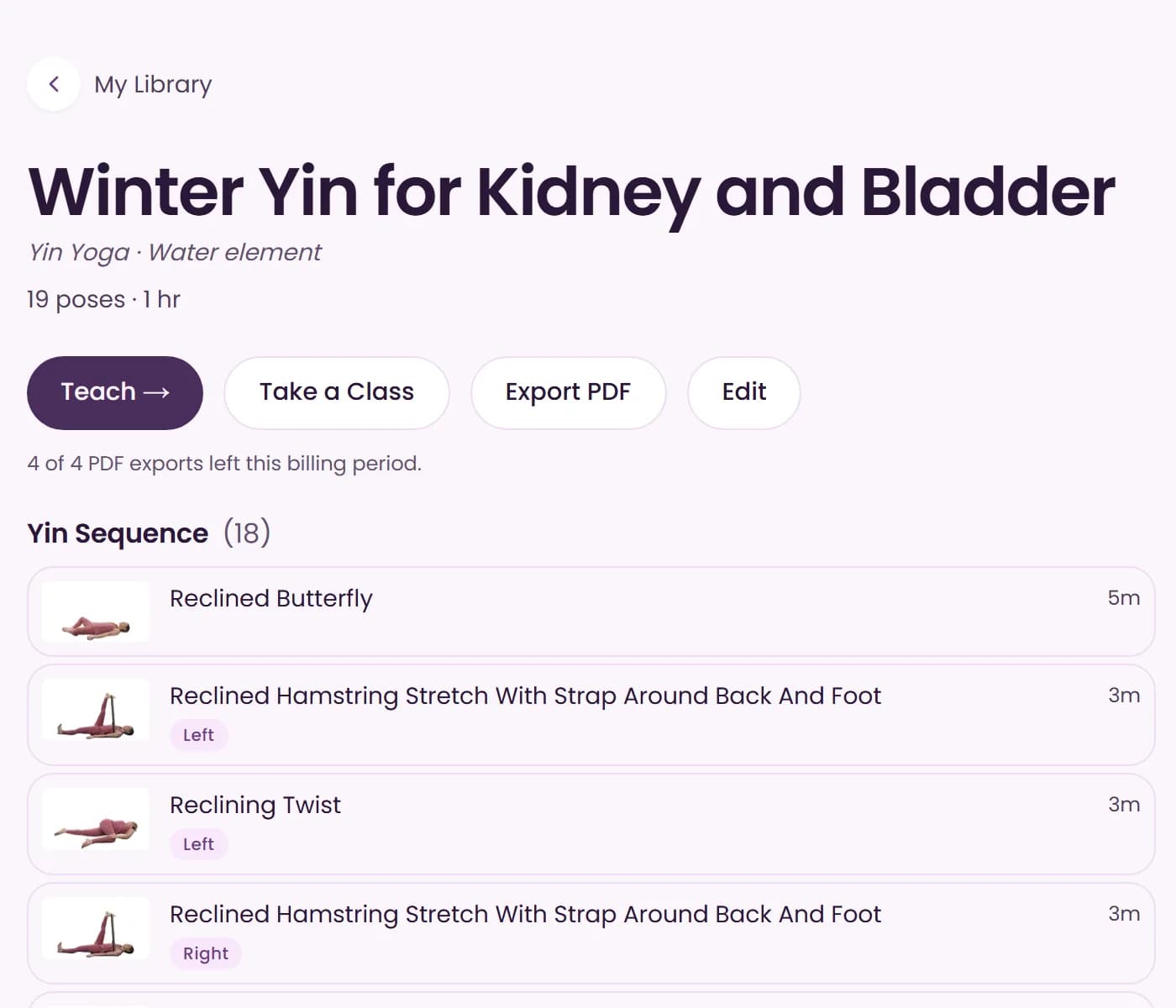
Want to build your own?
My husband and I built Yin Sequencing Studio to make this process easier for yin teachers. You can browse pose variations, build your class, and learn from class plans shared by other teachers. If you’re curious, come take a look.