Yin vs. Restorative Yoga: What’s the Difference and Can You Mix Them?
Yin Yoga and Restorative Yoga are sometimes used interchangeably. After all, both practices are slow-paced, involve holding poses for several minutes, and often incorporate props.
But Yin Yoga and Restorative Yoga are NOT the same thing!
So, what’s the difference? And can you teach a class that combines both?
What Is Yin Yoga?
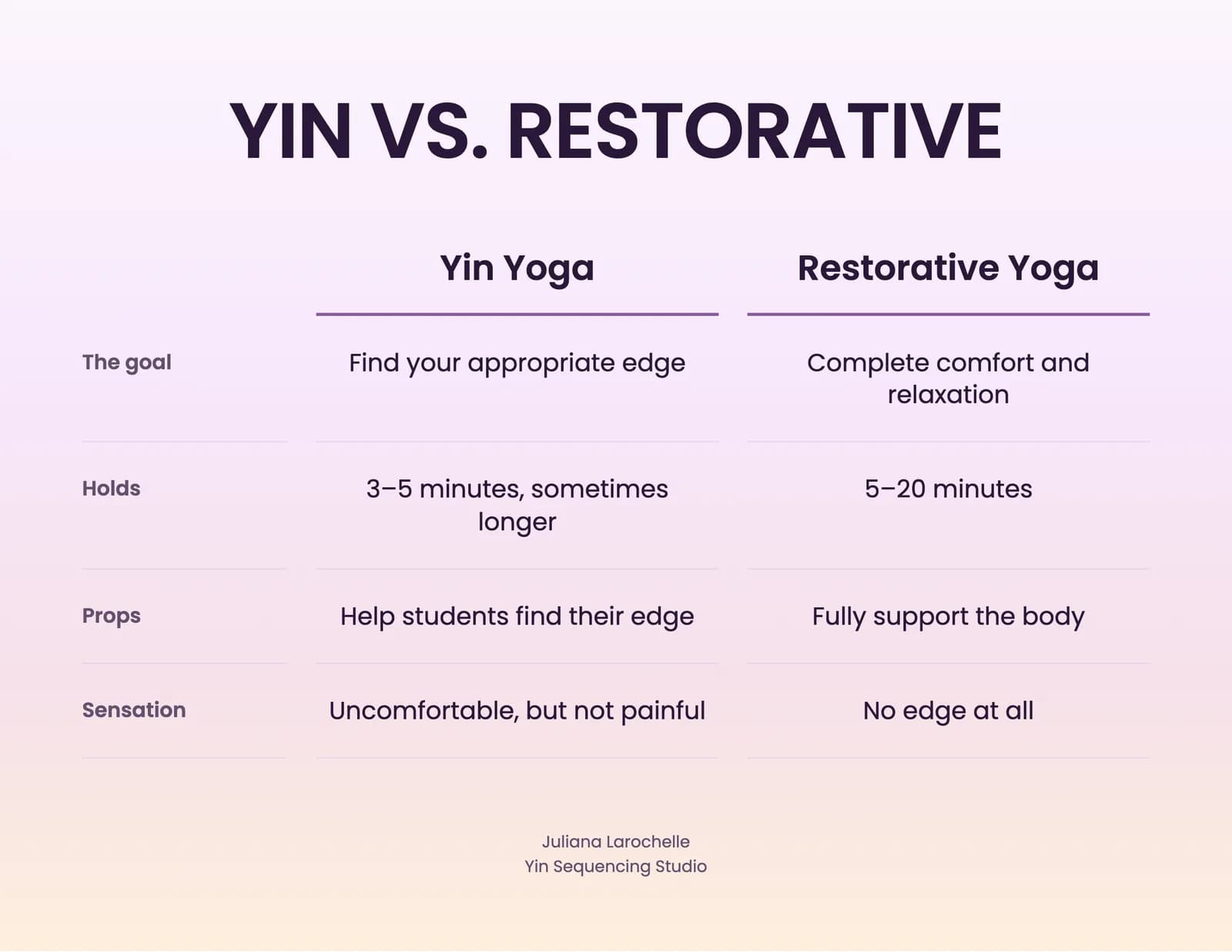
Yin Yoga is a powerful yet passive practice where poses are generally held for 3–5 minutes, sometimes longer.
Yin Yoga targets our connective tissues, including ligaments, joints, and fascia.
There are three main principles of Yin Yoga:
- Find your appropriate edge: The edge is where you feel sensation, but not the deepest expression of the pose you can do. It may feel uncomfortable, but not painful.
- Resolve to be still: Once you’ve found your edge, settle into stillness. The invitation is to resist any urge to move.
- Hold the pose for time: The magic in Yin happens over time. Hold the poses for several minutes and allow the breath, the pose, and time to do the work.
One of my favorite ways to describe Yin Yoga is that it teaches us how to become comfortable with being uncomfortable.
That doesn’t mean pushing through pain! It means learning to sit with discomfort rather than immediately trying to escape it. It’s a practice to learn the difference between needing to come out of a pose and wanting to come out of a pose.
What Is Restorative Yoga?
Restorative Yoga is a restful practice focused on slowing down, finding deep rest, and allowing the body to relax.
Poses are generally held for 5–20 minutes and often incorporate LOTS of props, including bolsters, blankets, and blocks.
The goal is to make the body feel SUPER comfortable!
Unlike Yin Yoga, where we intentionally explore our appropriate edge, Restorative Yoga has no edge at all. It is all about comfort and relaxation.
Props are used to fully support the body, minimize muscular effort, and encourage relaxation.
Does Using Props Automatically Make a Yin Class Restorative?
NO! And this is one of the biggest misconceptions I hear about Yin Yoga!
Just because you’re using bolsters, blocks, blankets, or creative prop setups doesn’t mean you’re teaching Restorative Yoga.
The difference comes down to INTENTION.
In Restorative Yoga, the intention behind using props is to create comfort and support so students can fully relax.
In Yin Yoga, the intention behind using props is to help students find their appropriate edge.
And here’s something I wish more Yin teachers understood:
Props don’t just make poses more accessible. They can make poses MORE challenging, too!
For example, let’s say you’re teaching Seated Butterfly in Yin Yoga and only have access to one bolster.
One option is to place the bolster at its tallest height in front of your students and have them fold forward over it. This can make the pose more accessible for students to hold the pose for time.
Another option is to place the bolster underneath their feet and have them fold forward. This can create a more challenging variation of the same pose.
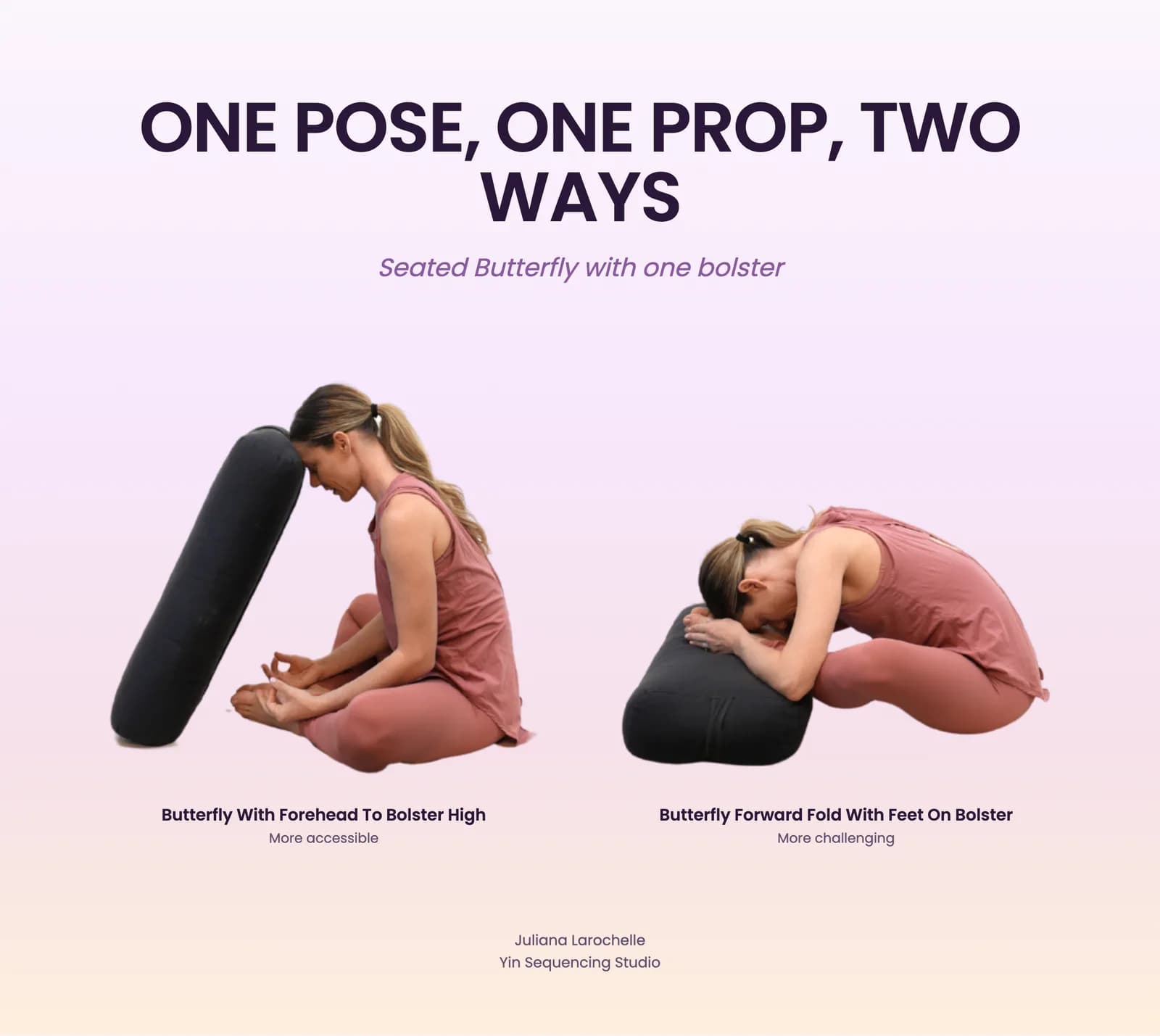
One pose, one prop, and two different ways to make the pose more accessible or more challenging!
The way you use props and cue your students determines whether you’re encouraging them to find their edge in Yin Yoga or fully relax in Restorative Yoga.
Can You Combine Yin Yoga and Restorative Yoga in One Class?
If you asked me this question a few years ago, I would have said ABSOLUTELY NOT! They are two completely different styles of yoga and should not be mixed at all.
But I’ve come around for a mix of reasons. My personal experience with injury and being hypermobile, my willingness to open my mind and be less rigid, and my acceptance of trying new things.
This is just my opinion, and I know it’s probably a very unpopular one, but YES, I think you can combine Yin Yoga and Restorative Yoga into one class!
The truth is, there is no yoga police, and you’re allowed to do what feels right for you and your students. Even if it’s different or unconventional!
There are a few ways you can combine these two styles:
Way 1: Teach Half Yin, Half Restorative
Teach the first half of class as traditional Yin Yoga, where students explore their appropriate edge and hold poses for several minutes. Then transition into traditional Restorative Yoga for the second half of class, where the focus shifts to complete comfort and relaxation.
Way 2: Teach a Restorative Yin Class
This is where you’re practicing traditional Yin poses but approaching them in a more restorative way. The goal isn’t necessarily to find your edge but to relax into the poses.
You can use props to provide additional support and encourage students to explore a more comfortable variation of each pose, rather than seeking a deeper sensation.
Or discover a way to combine the two styles that feels right for you and your students!
My one suggestion: Educate your students on what Yin Yoga and Restorative Yoga are, how they differ, and how you plan to combine the two in your class. This helps students understand the intention behind the practice and what to expect.
Take a look at Yin Sequencing Studio
Frequently asked questions
What is the main difference between yin and restorative yoga?
In Yin Yoga, poses are held for 3–5 minutes as students find their appropriate edge, where they may feel uncomfortable but not in pain. In Restorative Yoga, poses are held for 5–20 minutes with lots of props, and the goal is to feel super comfortable.
How long do you hold poses in yin and restorative yoga?
Yin poses are generally held for 3–5 minutes, sometimes longer. Restorative poses are generally held for 5–20 minutes. For more on timing, see how many poses fit in a yin class.
Does using props make a yin class restorative?
No. In Yin Yoga, props help students find their appropriate edge, and they can make a pose more accessible or more challenging. See a bolster ramp yin sequence for an example.