Yin Yoga Sequence Ideas: Keep Classes Fresh for Regulars
One of the biggest challenges yin yoga teachers face is keeping their classes fresh for regular students.
When I surveyed approximately 80 yin yoga teachers about their biggest challenges, keeping classes interesting for returning students was one of the top answers.
One yoga teacher shared:
“I feel like I repeat the same poses for every class. I teach a class every week that has the same people in it and I do not want them to be bored.”
And I get it!
When I completed my first traditional yin yoga teacher training, I was only taught about 30 yin poses. With such a limited number of poses, it can feel like there isn’t enough variety to keep your classes interesting week after week.
Yoga teachers, can you relate? I’m guessing that’s probably why you landed on this page!
The good news? Keeping your yin yoga classes fresh doesn’t have to be complicated.
Here are 5 creative ways to keep your yin yoga sequences fresh for regular students, without having to reinvent your entire class every week.
- Teach a creative variation of a familiar yin pose
- Use yoga props in a new way
- Build a yin sequence where the props don’t move
- Teach a yin yoga series
- Change up your pranayama and meditation
1. Teach a Creative Variation of a Familiar Yin Pose
One of the easiest ways to keep your yin yoga classes fresh is to introduce an uncommon variation of a pose your students already know.
By taking a familiar yin pose and teaching a creative variation, you give students an opportunity to experience the pose in a completely new way.
You don’t have to change your entire sequence, either! Sometimes, introducing just one new variation is enough to make a familiar class feel fresh.
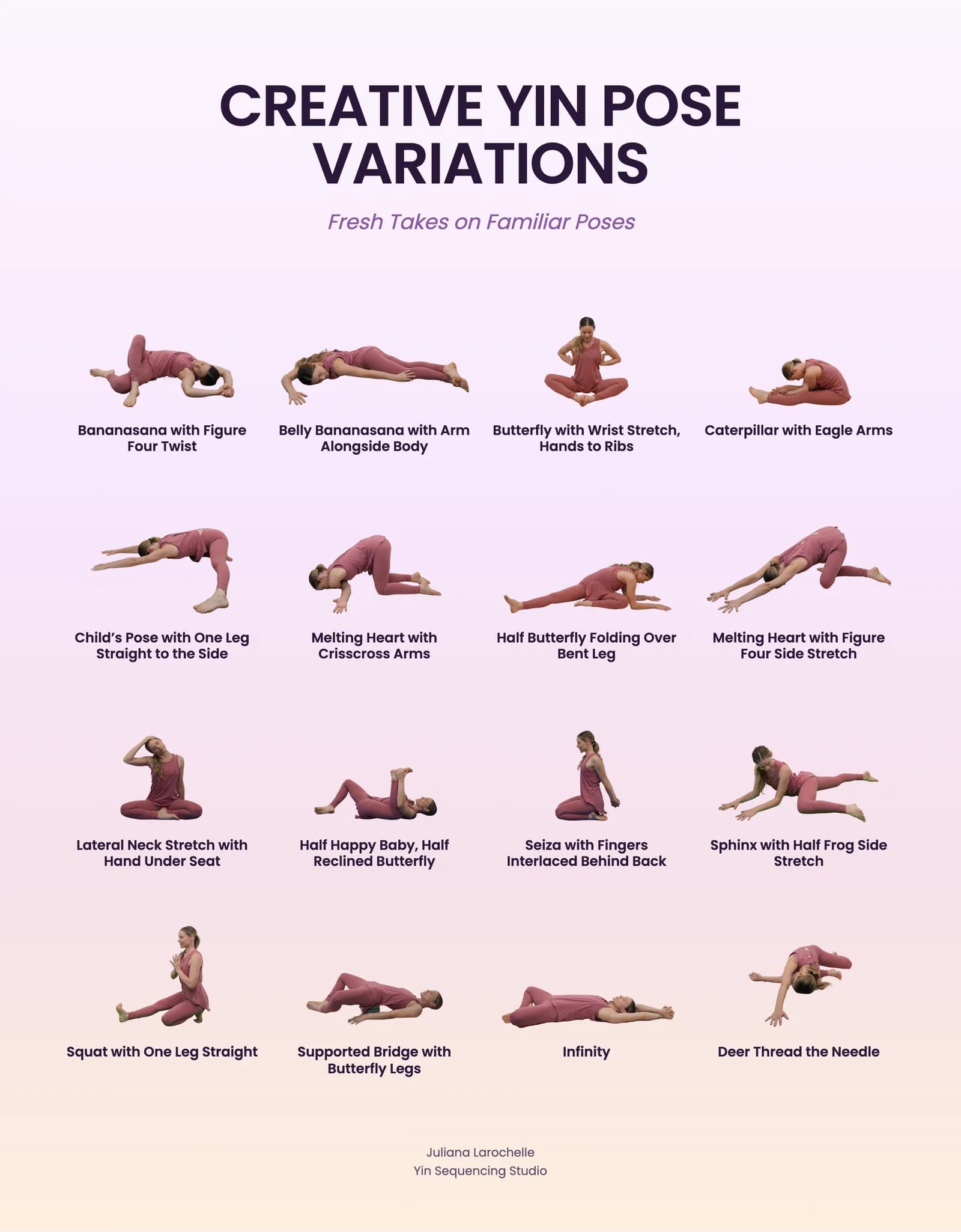
Creative yin pose variations to try:
- Bananasana with Figure Four Twist
- Belly Bananasana with Arm Alongside Body
- Butterfly with Wrist Stretch, Hands to Ribs
- Caterpillar with Eagle Arms
- Child’s Pose with One Leg Straight to the Side
- Melting Heart with Crisscross Arms
- Half Butterfly Folding Over Bent Leg
- Melting Heart with Figure Four Side Stretch
- Lateral Neck Stretch with Hand Under Seat
- Half Happy Baby, Half Reclined Butterfly
- Seiza with Fingers Interlaced Behind Back
- Sphinx with Half Frog Side Stretch
- Squat with One Leg Straight
- Supported Bridge with Butterfly Legs
- Infinity
- Deer Thread the Needle
2. Use Yoga Props in a New Way
Yoga props don’t just make poses more accessible. They can also make yin poses more challenging!
Remember, in yin yoga, the intention behind using props isn’t necessarily to make a pose more comfortable. Props can also help students find their edge.
One of my favorite ways to keep yin classes fresh is to introduce creative ways to use familiar props, including yoga straps, blocks, and bolsters.
Creative yin poses using a yoga strap:
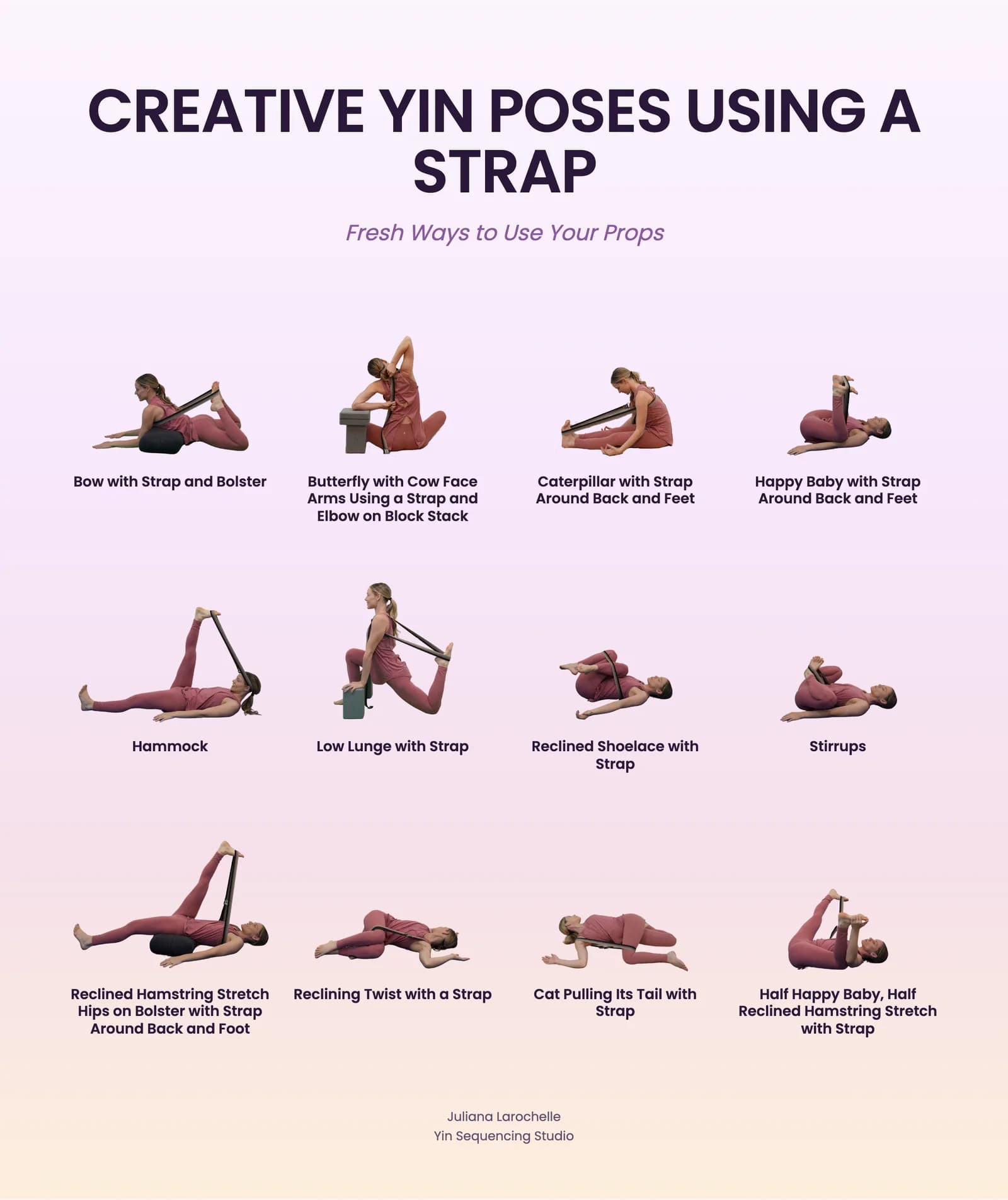
- Bow with Strap and Bolster
- Butterfly with Cow Face Arms Using a Strap and Elbow on Block Stack
- Caterpillar with Strap Around Back and Feet
- Happy Baby with Strap Around Back and Feet
- Hammock
- Low Lunge with Strap
- Reclined Shoelace with Strap
- Stirrups
- Reclined Hamstring Stretch Hips on Bolster with Strap Around Back and Foot
- Reclining Twist with a Strap
- Cat Pulling Its Tail with Strap
- Half Happy Baby, Half Reclined Hamstring Stretch with Strap
Teaching tip: When I teach yin poses using a strap, I generally choose just one strap variation for the class and have students set up their straps before we begin. This helps minimize interruptions during class. Sometimes, taller students need to loop two straps together to create enough length.
Creative yin poses using yoga blocks and bolsters:
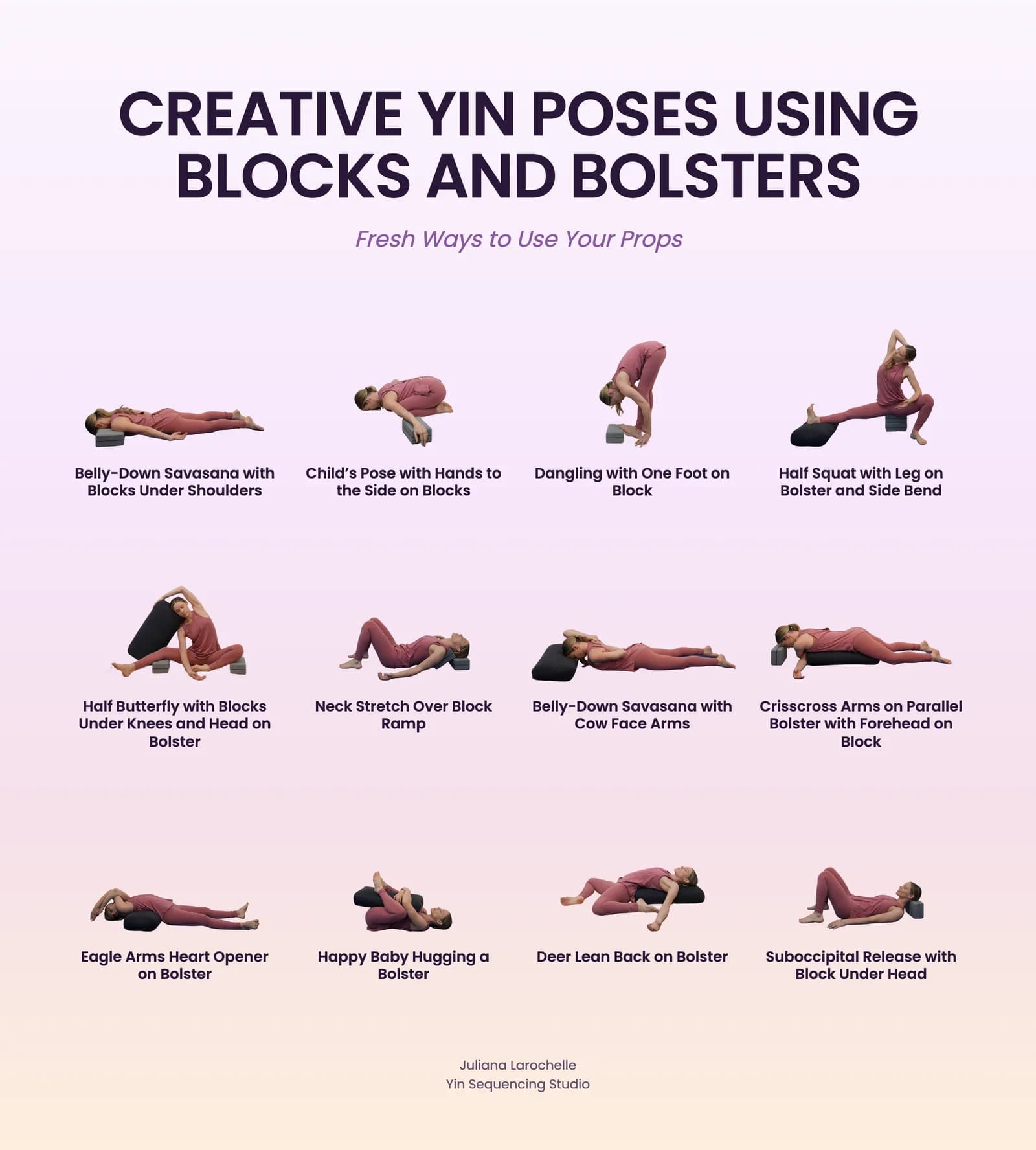
- Belly-Down Savasana with Blocks Under Shoulders
- Child’s Pose with Hands to the Side on Blocks
- Dangling with One Foot on Block
- Half Squat with Leg on Bolster and Side Bend
- Half Butterfly with Blocks Under Knees and Head on Bolster
- Neck Stretch Over Block Ramp
- Belly-Down Savasana with Cow Face Arms
- Crisscross Arms on Parallel Bolster with Forehead on Block
- Eagle Arms Heart Opener on Bolster
- Happy Baby Hugging a Bolster
- Deer Lean Back on Bolster
- Suboccipital Release with Block Under Head
3. Build a Yin Sequence Where the Props Don’t Move!
This is one of MY favorite ways to keep yin classes fresh! It’s my signature sequencing method, where you build an entire yin yoga sequence around a single prop, like a bolster, or a prop setup, like a bolster ramp or Stonehenge, and the props don’t move!
Instead of constantly rearranging props between poses, you sequence the class around the prop setup. This creates a more seamless, flowy yin experience while making prop management easier for both you and your students.
You can even take a yin sequence you already teach without props and teach the same poses using a prop or prop setup. Your students get to experience familiar poses in a completely new way, without you having to create an entirely new sequence from scratch!
4. Teach a Yin Yoga Series
What makes students want to keep coming back to your yin yoga classes? Feeling like they’re learning something new or progressing in their practice!
One of the best ways to keep your classes fresh and give students something to look forward to is to teach a 4-week, 6-week, or even 8-week yin yoga series.
And yes, you can absolutely do this during your regularly scheduled weekly yin class!
Each week, explore a different theme or focus that connects to the overall series. Some ideas include:
- Chakra Series: Explore a different chakra each week through yin poses, meditation, and philosophy.
- Journey to a Yin Pose Series: This can be done in two ways. One way is to build up to a peak yin pose, like Saddle or Frog, over 4 weeks. The other way is to explore a different peak yin pose each week. A peak yin pose is a pose that can be challenging to hold for 3 to 5 minutes, like Saddle, Frog, Toe Squat, or Square.
- Five Elements Series: Explore the elements of Traditional Chinese Medicine and their associated meridians through yin yoga.
- Where the Props Don’t Move Series: Build each class around a different prop setup, like a sideways bolster, a bolster ramp, or Stonehenge.
- Body Part Series: Focus on a different area of the body each week, like the hips, spine, shoulders, and legs.
- Koshas Series: Explore a different layer of being each week, moving from the physical body to the breath, the mind, wisdom, and bliss.
- Yamas and Niyamas Series: Choose one of the yamas or niyamas from the Yoga Sutras as the theme for each class.
- Intro to Yin Series: Teach a different yin yoga concept each week, like what yin yoga is, what your edge is, how to play your edge, and how to listen to the sensations of the body.
Not only does this give you a creative direction for sequencing, but it also gives your regular students a reason to keep coming back!
Teaching tip: At the end of each class, share a little preview of what you’ll be exploring the following week. This builds excitement and gives students something to look forward to!
5. Change Up Your Pranayama and Meditation
Here’s another easy way to keep your yin yoga classes fresh without changing a single pose: change up the pranayama or meditation you incorporate into class!
You can teach the exact same yin sequence from one week to the next, but introduce a different breathing technique or meditation to give students a new experience.
Some pranayama techniques you can incorporate into your yin classes include:
- Three-Part Breath
- Soft Ujjayi Breath
- Soothing Breath (Inhale for 4, Exhale for 8)
- Square Breath
- Alternate Nostril Breathing
- Bee Breath (Bhramari)
- Cooling Breath (Sitali)
- Sighing Breath (Double Inhale, Long Exhale)
- Left Nostril Breathing (Chandra Bhedana)
- Breath Counting
You can also introduce a different short meditation each week. Some ideas include:
- White Light Meditation
- Breath Awareness Meditation
- Chakra Meditation
- Releasing Meditation
- Mantra Meditation
- Body Scan Meditation
- Loving-Kindness Meditation
- Gratitude Meditation
- Grounding Meditation
- Sound Awareness Meditation
The poses can stay exactly the same, but changing the pranayama or meditation can completely shift the experience of the class.
This is also a great opportunity to introduce students to different mindfulness practices and help them discover which techniques resonate with them.
Find Fresh Yin Sequence Ideas in the Yin Sequencing Studio
If you’re ready to break out of the same-five-poses rut, I created the Yin Sequencing Studio for you!
It’s a yin yoga app where you can explore a pose library with real photos, prop options, and creative variations, so you’re never stuck wondering what to teach next. You’ll also get 20+ done-for-you yin sequences from me, with a brand-new sequence added every month, plus a Dharma talk library and a playlist library to help you keep the rest of your class fresh, too.
When inspiration strikes, build your next class in the yin sequence builder, then teach it with Teach mode and its built-in timer. And you can browse the community library to see how other yin teachers are sequencing their classes!
Try it FREE for 7 days, then it’s just $5/month. Cancel anytime.
Frequently asked questions
How do I keep my yin yoga classes fresh for regular students?
You don’t have to reinvent your entire class every week. Try one of these five ideas: teach a creative variation of a familiar pose, use props in a new way, build a sequence where the props don’t move, teach a yin yoga series, or change up your pranayama and meditation.
Is it okay to teach the same yin sequence every week?
Yes! You can teach the exact same yin sequence from one week to the next and introduce a different breathing technique or meditation. The poses can stay exactly the same, but the experience of the class can completely shift.
What is a yin yoga series?
A 4-week, 6-week, or 8-week run of classes where each week explores a different theme or focus that connects to the overall series, like the chakras, the Five Elements, a journey to a peak yin pose, or an intro to yin. You can teach it during your regularly scheduled weekly yin class.
How many yin yoga poses are there?
My first traditional yin yoga teacher training taught about 30 yin poses. Creative variations and new ways of using straps, blocks, and bolsters give you many more options to keep your classes interesting week after week.
What is a yin sequence where the props don’t move?
It’s a yin yoga sequence built around a single prop, like a bolster, or a prop setup, like a bolster ramp or Stonehenge. Instead of rearranging props between poses, students move around the prop setup, which makes class feel more seamless and prop management easier.